
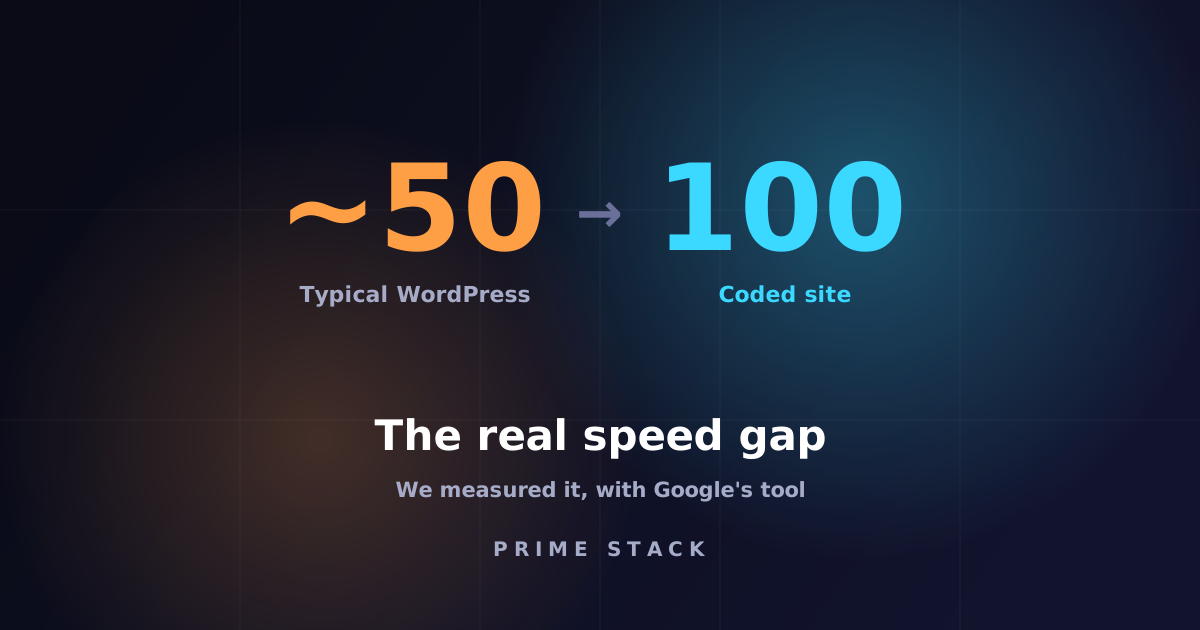
Everyone says “a fast site matters.” But how fast, and what’s the real gap versus what you have now? Instead of relying on promises, we measured, with Google’s official tool.
Five sites we built, measured
We took five real sites we built in code (Astro), of different types, and checked their mobile speed score in PageSpeed Insights. The results, as of July 2026:
| The site | Type | Speed (mobile) | Load time (LCP) |
|---|---|---|---|
| bht.co.il | Brochure site | 100 | 0.8s |
| primestack.co.il | Agency (our own site) | 100 | 1.5s |
| theboss.co.il | Brochure site | 99 | 1.7s |
| eyalmeshulam.com | Personal site | 99 | 1.8s |
| tehilagames.com | Games site | 96 | 1.6s |
All five above 96 out of 100, and all load in under two seconds. It’s not a coincidence, and it’s not special per-site optimization: it’s simply the default of how we build, static code with no page builder and no dozens of plugins.
The other side: real WordPress sites
To keep the comparison fair, we need the other side too. As part of the health reports we run for businesses, we audited dozens of real WordPress sites, law firms, stores, consultants and other professionals. The range we saw on mobile:
- A veteran law firm site: 54, 17-second load time.
- An online store ranked well on Google: 63, 2.7-second load time.
- A business consultant’s site: 39, 17.6-second load time.
- An accounting firm: 34, 31-second load time.
Most ranged between 34 and 65 on mobile. Some are excellent in content and ranking, but get dragged down by technical weight.
The gap, and what it means
The numbers speak: 34-65 versus 96-100. That’s not a difference of a few points, it’s a different world. A site that loads in 17 seconds on mobile loses most of its visitors before they see anything. A site that loads in a second and a half doesn’t.
And that gap costs money: less abandonment, better Google ranking (which penalizes slow sites), and AI visibility too, since engines skip heavy sites when they crawl for answers. All from the exact same traffic.
Where are you on the scale?
The real question isn’t “is a fast site better” (the answer is clear), but where your site is today. Our digital health report measures exactly that, along with your Google ranking and AI visibility, and shows what’s worth fixing first.